That Can Is a Loan Against Next Week's Sleep
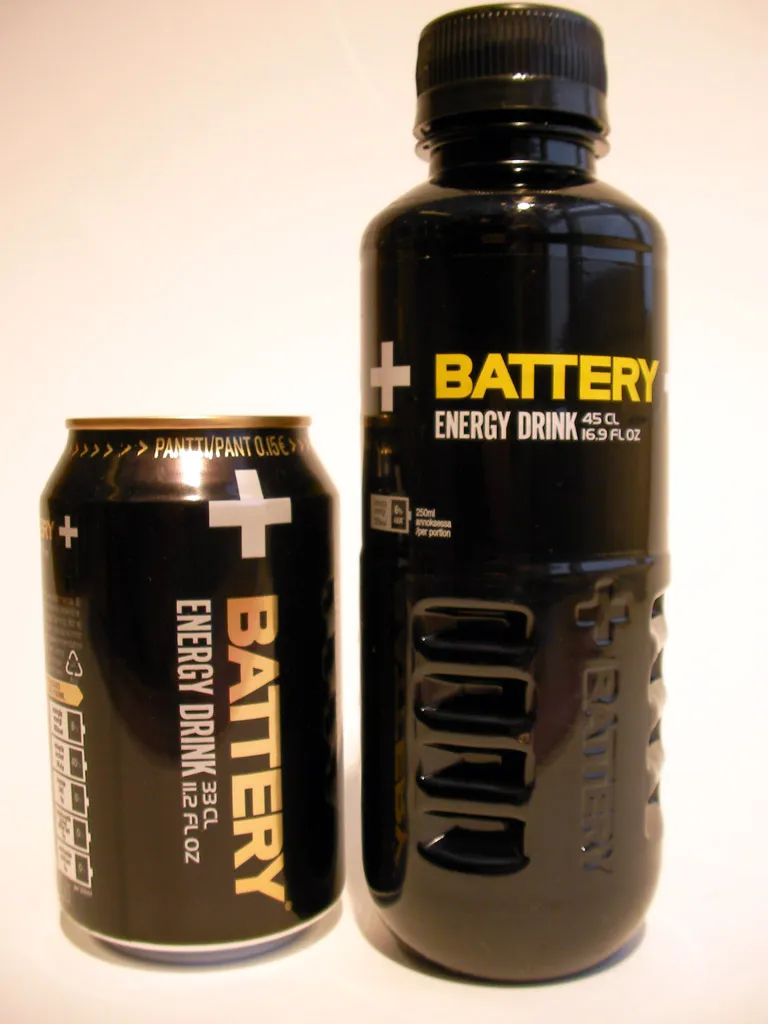
Photo: Juice79, Public domain, via Wikimedia Commons
The Receipt You Actually See
Let's start with the easy math, because it's the math everybody ignores. A daily energy drink or fancy cold brew runs somewhere between $6 and $8 in most American cities. Call it $7. Multiply by 365 and you're spending $2,555 a year on liquid alertness.
If you flinched a little reading that, good. But here's the thing — that's not even the real bill. That's just the cover charge.
The Crash Is a Second Purchase
Every caffeine high comes with a checkout line. The 3 p.m. slump that follows your morning can has its own price tag: the vending machine snack, the second coffee, the gas station stop on the drive home. If the crash costs you even $3 a day in impulse purchases — and if we're honest, it usually costs more — that's another $1,095 a year.
So your "$7 habit" is quietly a $10-a-day habit. Nobody rings that up at the register, which is exactly why it works.
Borrowing From Tomorrow's Sleep
Here's where the metaphor in our headline stops being a metaphor. Caffeine has a half-life of roughly five to six hours. That 2 p.m. pick-me-up? A quarter of it is still circulating in your bloodstream at midnight, quietly sabotaging the deep sleep you need to feel awake in the morning.
And what do you do when you wake up tired? You reach for another can.
That's the interest rate. You're not buying energy — you're borrowing it from tomorrow, at a rate that compounds. Poor sleep degrades your focus, your mood, and your immune system, which eventually shows up as more sick days, more convenience food, and yes, more doctor visits. You don't need us to tell you what an ER copay does to a monthly budget.
What the Money Becomes If You Keep It
Now for the part that should genuinely hurt. Suppose you skipped the daily can and the crash purchases — call it $10 a day, $3,650 a year — and invested it in a boring index fund averaging a 7% annual return. Here's the trajectory:
| Time Horizon | Total Invested | Approximate Value |
|---|---|---|
| 10 years | $36,500 | ~$53,000 |
| 20 years | $73,000 | ~$151,000 |
| 30 years | $109,500 | ~$352,000 |
Read that last line again. Three hundred and fifty thousand dollars. That's a retirement account funded entirely by a beverage. The 10-year number alone — fifty-three grand — is a solid down payment in most of the country outside the coasts.
The 7% figure isn't fantasy, either. It's roughly the long-run, inflation-adjusted return of the S&P 500. The hard part isn't the math; it's the daily decision. Which is why the caffeine industry spends billions making sure the decision never feels like a decision.
You Don't Have to Quit Cold (Turkey)
We're not here to tell you caffeine is evil. Plenty of research says moderate coffee consumption is fine, even beneficial. The problem is the delivery system: the $7 daily habit with a crash attached.
A few moves that actually work:
- Brew at home. A bag of good whole-bean coffee costs about $15 and makes roughly 30 cups. That's fifty cents a cup versus seven dollars. Even upgrading to a decent grinder and pour-over setup pays for itself in six weeks.
- Buy the caffeine, skip the theater. Caffeine pills cost pennies per dose. So does generic black tea. Unsexy, effective.
- Cap the afternoon dose. Set a caffeine curfew of noon. Your sleep will improve within a week, and the morning need for the can will shrink on its own.
- Automate the savings. Whatever you're not spending anymore, move it to an investment account the same day. Money that sits in your checking account gets spent. Money that's in a brokerage account compounds.
The Real Cost of Your Vices
Every habit on this site has the same architecture: a small visible cost hiding a larger invisible one. With gambling, it's the losses plus the chase. With smoking, it's the packs plus the insurance premiums. With energy drinks, it's the can plus the crash plus the sleep you never get back.
The can itself was never the expensive part. The expensive part is what it borrows — from your afternoon, your nights, and eventually your net worth. Stop paying the interest, and start collecting it instead.