Twenty Years of Tickets: What Your Lottery Habit Actually Bought You (Spoiler: Nothing)
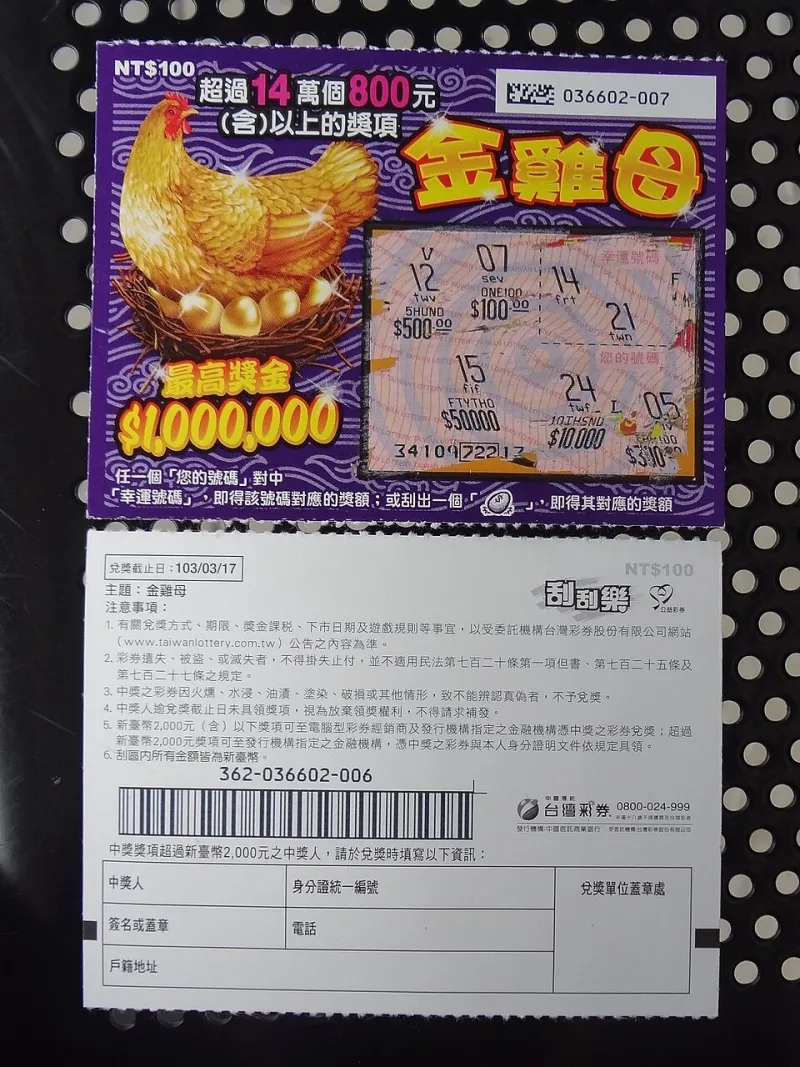
Photo: Solomon203, CC BY-SA 3.0, via Wikimedia Commons
There's a particular ritual that happens at gas stations across America every Wednesday and Saturday night. Someone steps up to the counter, orders a fountain drink, and then — almost as an afterthought — asks for five quick picks and a couple of scratch-offs. Total damage: about $20.
Nobody thinks of that as a bill. It's not like rent or a car payment. It's hope, conveniently priced at $1.99 per chance. But hope purchased twice a week for twenty years adds up to something your future self would definitely like to discuss with you.
The Receipt Nobody Keeps
Let's run the numbers on a fairly typical player. Say you spend $20 a week — a mix of Powerball tickets, Mega Millions, and the occasional $5 scratch-off when the mood strikes. That's $1,040 a year. Over twenty years, you've handed the lottery commission $20,800.
And here's the part that stings: the expected return on that money is roughly negative 50%. Lottery games, on average, pay back about half of what they take in. So the "real" value of your twenty years of play, in pure mathematical terms, is around $10,400 in winnings — and most of that comes as a handful of $20 and $100 prizes that you almost certainly recycled into more tickets.
Compare that to nearly every other vice on this site. Cigarettes at least deliver nicotine. Your streaming subscriptions deliver content. The lottery delivers a two-day fantasy and a wallet full of losing tickets.
What the Jackpot Fantasy Actually Costs
Defenders of the lottery will tell you it's entertainment — and honestly, fair. A $2 ticket that buys you the drive home imagining what you'd do with $300 million is cheap daydreaming. The problem is that the fantasy has a way of scaling.
The casual player becomes the subscription player. Many state lotteries now let you auto-purchase tickets online, deducting from a stored balance. It's the same trick streaming services and gym memberships use: remove the moment of decision, and the spending continues on autopilot. A $20 weekly habit quietly becomes $40 when the jackpot rolls past $500 million, because "this time it's actually worth it."
But here's the uncomfortable truth about jackpot odds: at roughly 1 in 292 million, you are statistically more likely to be struck by lightning this year than to win Powerball in your lifetime of play. You're not buying a ticket. You're buying a very expensive permission slip to imagine.
The Index Fund Counterfactual
Now for the part lottery players really don't want to see. Take that same $20 a week and put it into a boring, low-cost S&P 500 index fund instead. Historically, the market has returned about 10% annually before inflation — let's use a conservative 8% to be safe.
- After 10 years: roughly $15,700
- After 20 years: roughly $50,000
- After 30 years: roughly $130,000
That's right. The lottery habit you never thought of as a financial decision is, over a working lifetime, the difference between a five-figure investment account and a shoebox of losing tickets. And unlike the lottery, the index fund has never once failed to pay out to a patient, diversified investor over a 20-year stretch.
No, you won't win $300 million. But you also won't spend three decades funding a system where the house edge makes a casino look generous — commercial slots pay back 90-95%; lotteries return closer to 50-60%.
How to Keep the Fun Without the Leak
We're not here to tell you to quit cold turkey. If the Wednesday night ticket genuinely brings you joy, here's how to shrink the damage:
- Set a lottery budget you'd be embarrassed to exceed — say $10 a month, cash only. When it's gone, it's gone.
- Never let it go on autopilot. Skip the online subscriptions and auto-renewals. Every ticket should involve a conscious decision.
- Match it. Every time you buy tickets, move the same amount into a savings or brokerage account. At $20 a week, that's the $50,000 — with the lottery still in your life.
- Play pools, not solo. Office pools split the cost and the odds are identical. Your entertainment-per-dollar roughly doubles.
The lottery sells certainty of loss dressed up as possibility. You don't have to give up the daydream — you just have to stop paying full price for it twice a week.