The Convenience Tax: You're Already Paying It, So Why Not Know the Rate?
Photo: , Public domain, via Wikimedia Commons
Let me say the quiet part loud: convenience spending isn't really about products anymore. It's a fee structure. You're not buying a parking spot, a burrito, or a ride — you're buying the absence of effort, and the absence of effort has a markup that would make a stadium vendor blush.
I've started thinking of it as the convenience tax. It's not levied by any government. It's just quietly collected, month after month, from people who never see the line item.
What the Tax Actually Costs
Run a typical downtown-dwelling American through a year of convenience fees and watch this pile up:
- Parking app fees: apps like SpotHero and ParkMobile tack on service charges of $1–$3 per session. Two sessions a week? Call it $250/year.
- Food delivery: between service fees, delivery fees, and the tip-on-a-fee tip structure, a $20 order routinely becomes $38. Two orders a month, conservatively, is $430/year in fees alone.
- ATM charges: out-of-network withdrawals average close to $5 all-in (your bank's fee plus the operator's). Twice a month = $120/year.
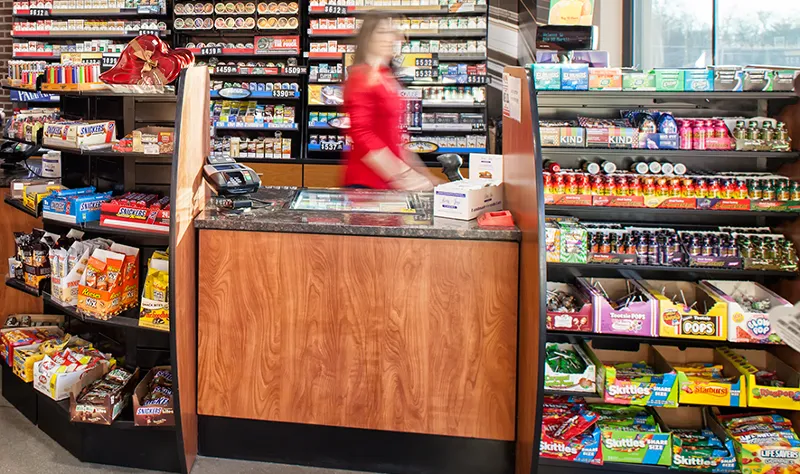
- Convenience store markup: the same 12-pack of soda that costs $7 at the grocery store is $11 down the block. $200+/year for the regulars.
- Surge-priced rideshares: that 1.8x surge on a Friday night is real money. Even one surge fare a month at a $12 premium is $144/year.
Total: roughly $1,150 a year. That's a week in Cancún. That's a fully funded emergency fund starter. That's the difference between 'I can't afford to invest' and 'I maxed my IRA match.'
And here's what makes it worse: every one of these fees is invisible by design. Delivery apps bury the service fee below the fold. Parking apps show you the spot price first and whisper the fee at checkout. The tax works because you never see it itemized.
The Friction Reset: Five Swaps, Zero Heroics
I'm not going to tell you to meal-prep seven days a week or take a bus two hours each way. Convenience exists for a reason. The goal is to keep the convenience you actually value and stop paying for the kind you don't notice. Five swaps:
1. Batch your ATM withdrawals. One in-network withdrawal a month, on a day you're already near your bank. Zero lifestyle change, $120 back.
2. Set a delivery 'allowance.' Keep the app, but limit it to two orders a month, prepaid on a dedicated gift card. When the card's empty, you cook or pick up. You'll be amazed how many 'must have delivered' cravings were really just 'don't want to put on pants.'
3. Book parking ahead, always. The same spot that costs $4 in app fees on arrival is often $12 cheaper and fee-free when reserved the night before. Two minutes of planning, four figures of savings over a year for daily parkers.
4. Wait out the surge — or share it. Surge pricing is a fifteen-minute problem most of the time. Get a coffee, walk a block away from the venue, or split the fare. You'll skip the premium more often than not.
5. Do a monthly 'fee sweep.' First Saturday of the month, scan your bank and card statements for anything containing the words 'service,' 'convenience,' or 'fee.' You can't dispute them all, but seeing them itemized changes what you'll tolerate next month.
Pay for Convenience on Purpose
To be clear, I'm not anti-convenience. I've paid $9 for a salad I could've made for $3 and I'd do it again. The issue is unexamined convenience — fees on autopilot, collected because friction was annoying in the moment.
So flip the default. Convenience should be a purchase you make deliberately, the way you'd buy anything else, with a rough sense of what it costs annually. Some of it will still feel worth it. A lot of it, once you see the yearly bill, won't.
The convenience tax is voluntary. Nobody has to keep paying it — most people just never got an itemized statement. Consider this yours.