The Store Is Rigged: Why Your 'Quick Grocery Run' Costs $38 More Than It Should
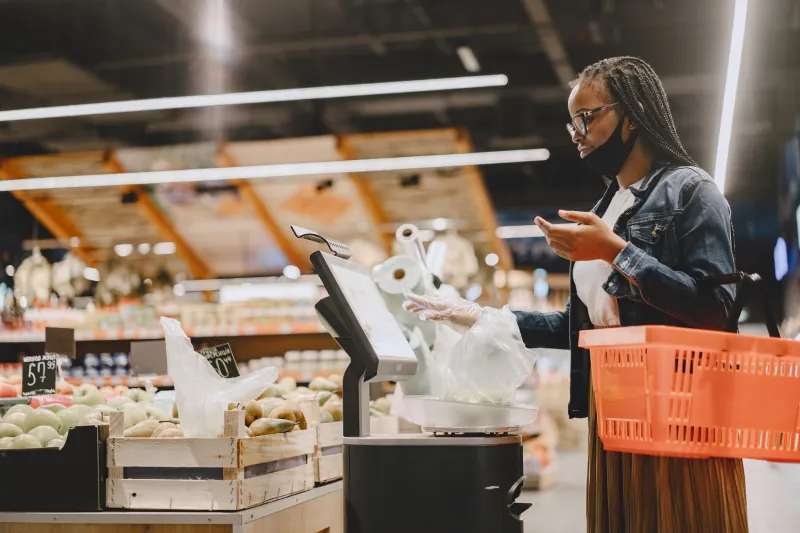
You walked in for milk and eggs. You walked out $67 lighter, holding two candles, a bag of tortilla chips you didn't need, and a 'deal' on pasta sauce that wasn't actually a deal. Sound familiar? That's not a willpower problem. That's architecture.
The Milk Is in the Back on Purpose
Every major US grocery chain hires planogrammers and retail consultants whose sole mission is keeping you in the building longer. The most-purchased staples — milk, eggs, bread — get pushed to the far corners so you traverse the entire store, passing thousands of products, on your way to get them.
That's called the 'maze,' and the industry has studied it for decades. The longer you're inside, the more you buy. It's the same logic a casino uses: no clocks, no windows, and a layout that makes leaving feel like an inconvenience.
And it works. Behavioral economists estimate that unplanned purchases add 20% to 30% to the average American family's grocery bill. If your household spends $800 a month on food — close to the national average for a family of four — that's $160 to $240 every month going toward stuff nobody wrote on the list.
Three Traps, Three Price Tags
The endcap. Those big displays at the end of every aisle feel like sales. Sometimes they are. Often they're just... displays. The product moved to the endcap frequently costs more per unit than the same item sitting quietly in its normal aisle spot. Average damage: $4–6 per trip when you grab something 'because it was right there.'
The BOGO. Buy one, get one free sounds like a 50% discount, and sometimes it is. But plenty of BOGO deals are priced so the store recoups the 'free' item — you pay full price plus 40% for two units you only wanted one of. If the item spoils before you eat it, your savings rate on that purchase is negative. Congratulations, you paid extra to throw food away.
The checkout aisle. Candy, magazines, batteries, those weird $6 energy drinks — the checkout corridor is the most valuable real estate in the store, and it exists entirely to catch you at your weakest moment: tired, done shopping, wallet already out. Industry data suggests checkout impulse buys alone average $3–5 per trip. Over 100 trips a year, that's $300–500. On candy bars.
The Annual Bill Nobody Reads
Let's add it up for a typical household making 1.5 grocery trips a week:
- Endcap and display grabs: ~$350/year
- BOGO overbuying and food waste: ~$400/year
- Checkout lane hits: ~$400/year
- General unplanned items (the 20–30% impulse markup, conservatively at the low end): ~$1,250/year
That's roughly $2,400 a year — about the average monthly car payment in the US, paid annually to the impulse economy. Over a decade, invested at even a modest return, that's pushing $35,000. It's a down payment. It's a kid's first year of college at a state school. It's a very nice used car you bought one candy bar at a time.
The Counter-Strategy: Three Moves, One System
1. The strict list — written before you're hungry. Decide meals for the week, build the list at home, and treat it like a contract. The trick isn't discipline in the store; it's making the decision when the store's tricks can't reach you.
2. Pickup or delivery — with a fee ceiling. Ordering online removes the maze entirely. There's no endcap in a search bar. Yes, fees exist — so pick a service cap you can live with, say $5 per order, and compare it to the $20+ you were bleeding in impulse buys. You come out ahead almost every week. Bonus: seeing the running total as you add items kills the casual 'eh, sure' add-ons.
3. Know the map. If you do shop in person, shop the perimeter — produce, meat, dairy — and only dip into aisles for specific list items. Grab the milk last, not first, so you're not pushing a cart through the whole store on your way to one thing. And if your store has self-checkout with a candy-free lane, use it. That's not antisocial; that's a firewall.
You're Not Weak, You're Outnumbered
The reason grocery stores feel harmless while casinos feel dangerous is branding. Nobody puts a slot machine next to the bananas — they put a two-for-one sign, which does the same job. Your weekly run became a gambling loss in slow motion, and the house always designed the floor.
The good news: unlike the casino, you can beat this one with a piece of paper and a pickup order. $2,400 a year is sitting on the table. Walk the perimeter, follow the list, and take it home.